
There is something deeply satisfying about watching tarnished copper transform back into its original warm, rose-gold brilliance in a matter of minutes — using nothing more than ingredients already sitting in your kitchen.
Whether you have inherited a set of copper pans, invested in artisan copper homeware, or simply want to restore the lustre to a beloved copper mug or pot, this guide covers everything. The five best methods for cleaning copper at home, how to tackle badly tarnished copper that has been neglected for years, how to restore a copper finish, and how to keep copper looking beautiful long term — all explained clearly, step by step.
No harsh chemicals required. No expensive specialist products. Just proven, natural methods that genuinely work.
Why Does Copper Tarnish in the First Place?
Before diving into cleaning methods, it helps to understand what is actually happening to your copper — because understanding the cause makes every cleaning method work better.
Copper tarnishes through a process called oxidation. When copper is exposed to oxygen in the air, it reacts to form copper oxide — a darker, duller layer on the surface. This is not damage. It is a completely natural chemical process, and the resulting patina actually forms a protective layer over the copper beneath.
Several factors accelerate tarnishing. Humidity accelerates oxidation, which is why copper kept in kitchens or bathrooms tarnishes faster than copper stored in dry environments. Salt air in coastal areas has the same effect. Oils from handling, even from clean hands, leave residues that react with the copper surface over time. Heat from cooking rapidly darkens copper exteriors.
The good news is that all of this tarnish — whether light surface dulling or the deep, dark oxidation of poorly maintained copper — responds well to the right cleaning approach. Here is exactly what works.
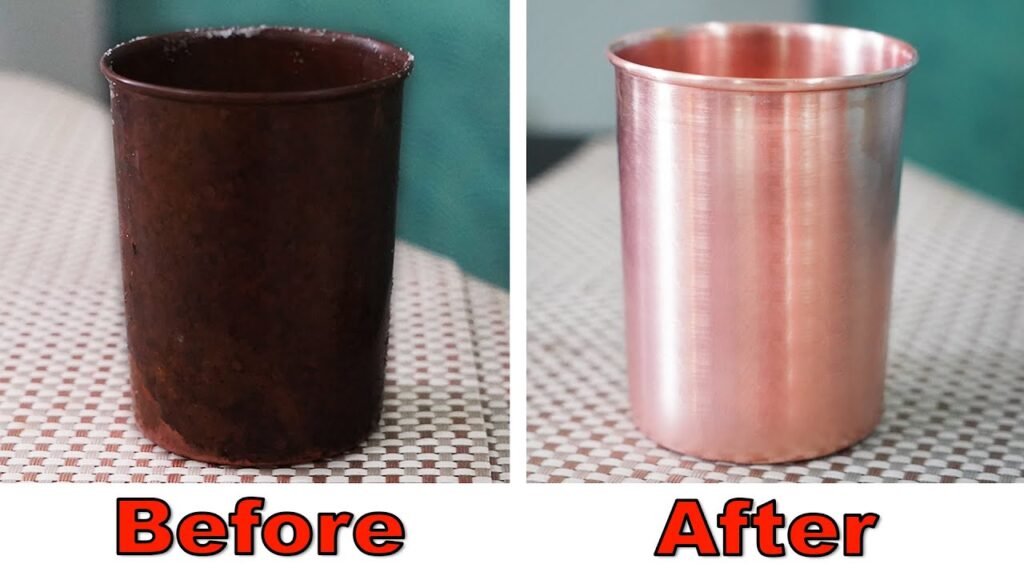
Method 1 — Lemon and Salt: The Best Everyday Cleaning Method
Best for: Light to moderate tarnish, regular maintenance, copper mugs, cups, decorative pieces
Time needed: 5 to 10 minutes
This is the single most effective natural method for cleaning copper and the one we recommend for regular maintenance of Viviana London pieces. The citric acid in lemon breaks down copper oxide (tarnish) chemically, while the salt acts as a gentle physical abrasive, lifting residue without scratching the surface.
What you need: One fresh lemon, table salt or fine sea salt, a soft cloth, warm water, a dry towel.
How to do it: Cut the lemon in half and sprinkle the cut surface generously with salt. Rub the salted lemon directly onto the copper surface using firm circular motions. You will see the tarnish lifting almost immediately — the lemon juice darkens as it absorbs the oxidation, which means it is working. Work across the entire surface, adding more salt as needed for stubborn areas. For tight spots or engraved details, squeeze some lemon juice into a small bowl, add salt, and apply with a soft cloth or old toothbrush. Once the entire surface is treated, rinse thoroughly under warm running water to ensure all salt and lemon residue is completely removed. Dry immediately and completely with a soft towel. Do not let the copper air dry, as water spots form quickly on freshly cleaned copper.
Pro tip: For stubborn patches, press the salted lemon onto the area and leave it for one to two minutes before rubbing. The extended contact time allows the acid to penetrate deeper into the tarnish layer.
Method 2 — Vinegar and Salt Paste: How to Clean Badly Tarnished Copper
Best for: Heavily tarnished copper, badly neglected pieces, copper that has not been cleaned in years
Time needed: 20 to 40 minutes
If your copper is seriously tarnished — deeply darkened, almost black in places, or showing years of neglect — lemon alone may not be enough. Vinegar and salt paste is the most powerful natural cleaning method for badly tarnished copper and consistently delivers dramatic results.
What you need: White vinegar, table salt, plain flour (optional), a soft cloth or soft-bristled brush, warm water, a microfibre cloth.
How to do it: Mix two tablespoons of white vinegar with one tablespoon of salt in a small bowl. If you are cleaning a vertical surface or a shaped piece, add one tablespoon of flour to create a thicker paste that clings rather than running off. Apply the paste generously to the copper surface using a soft cloth. For copper with engraved patterns or hammered textures, work the paste into the detail with a soft brush. Leave the paste on the surface for 15 to 30 minutes. You may notice slight fizzing — this is the acetic acid in the vinegar reacting with the copper oxide, which means it is working exactly as it should. After the waiting time, rub firmly with circular motions. The tarnish should lift away readily. Rinse thoroughly under warm water — any vinegar residue left on the surface will continue to react and can cause new spots. Dry and buff immediately with a clean, soft cloth.
Pro tip: For copper that has been badly neglected for many years, repeat the process twice. The first application removes most of the tarnish; the second restores the copper to a true shine.
Method 3 — Baking Soda and Lemon: The Gentle Method for Regular Use
Best for: Copper jewellery, frequently used copper mugs, gentle maintenance cleaning, lacquered copper
Time needed: 5 to 15 minutes
For copper pieces that need regular cleaning — items you use daily or display prominently — a gentler approach prevents gradual surface wear while still keeping the copper bright. Baking soda and lemon juice create a mild paste that cleans effectively without the stronger acidity of pure lemon or vinegar.
What you need: Baking soda, fresh or bottled lemon juice, a soft cloth or sponge, warm water, a soft towel.
How to do it: Mix three parts baking soda with one part lemon juice in a small bowl. The mixture will fizz initially as the acid and alkali react—this is normal and will settle quickly. Apply the paste to your copper using a soft cloth, and gently work it over the entire surface in circular motions. For light, everyday tarnish, rub immediately. For moderate tarnish, allow the paste to sit for five to ten minutes before applying it. Rinse thoroughly with warm water, checking that no white baking soda residue remains in corners or engraved details. Dry thoroughly with a soft towel, then gently buff to bring out the copper’s natural glow.
Pro tip: This is the right method for Viviana London copper mugs and other daily drinkware. The gentler acidity preserves the surface over repeated cleaning cycles, whereas a stronger vinegar paste would gradually diminish it.
Method 4 — Tomato Ketchup: The Surprisingly Effective Method
Best for: Decorative copper pieces, intricate shapes, cleaning with children, and gentle tarnish removal
Time needed: 15 to 30 minutes
This may sound unconventional, but ketchup is one of the most effective and gentle copper cleaning methods available. The combination of tomato acid and vinegar in ketchup works steadily on tarnish while being mild enough for delicate pieces and completely safe for use around children.
What you need: Standard tomato ketchup (Heinz works consistently well), a soft cloth, warm water, a dry towel.
How to do it: Squeeze a generous layer of ketchup directly onto the tarnished copper, spreading it evenly across the entire surface. Do not be sparing—full coverage yields the best results. Leave the ketchup to sit for 15 to 30 minutes, depending on the severity of tarnish. Light tarnish requires less time; more heavily darkened copper benefits from the full half-hour. Using a soft cloth, rub the ketchup into the surface with circular motions. Unlike lemon or vinegar, the transformation is not immediate during application — it becomes dramatic during the rubbing stage, as the tarnish lifts away to reveal bright copper beneath. Rinse thoroughly under warm running water to ensure all tomato residue is removed. Dry and buff immediately.
Pro tip: This method is ideal for copper pieces with intricate hammered textures or engraved details, as the thick consistency of ketchup reaches into surface details without running off. It also works brilliantly on copper hardware — handles, knobs, and fixtures — where you want a controlled, mess-free application.
Method 5 — Commercial Copper Polish: When You Need Guaranteed Results
Best for: Valuable antiques, heirloom pieces, copper before special occasions, maximum shine
Time needed: 10 to 20 minutes
When natural methods need a helping hand — or when you are restoring a copper finish on a valuable or sentimental piece — a purpose-made copper polish delivers the most reliable, consistent results.
What you need: Quality copper polish such as Brasso, Cape Cod, or Wright’s Copper Cream, two soft cloths, optional gloves, warm water, a dry towel.
How to do it: Read the manufacturer’s instructions for your specific product before starting, as application methods vary. Apply a small amount of polish to a soft cloth — a little goes a long way with quality products. Work the polish onto the copper surface using gentle circular motions. Most polishes create a slight haze as they dry — this indicates the chemical reaction breaking down tarnish and is completely normal. Continue rubbing until the tarnish lifts and the surface begins to gleam. Apply fresh polish to fresh areas of cloth for heavily tarnished sections. Wipe away all polish residue with a clean, dry cloth. Buff firmly to activate the shine and, where the product includes tarnish-prevention ingredients, to activate the protective layer.
Pro tip: Use commercial polish sparingly, only when natural methods are not achieving the desired result. For everyday maintenance of copper homeware, natural methods are preferable — they are gentler on the surface, cheaper, and just as effective for regular tarnish.
How to Clean Heavily Tarnished Copper — Step by Step
If your copper has been neglected for years and has turned very dark, almost black, or has developed green patches (verdigris), here is the specific process to restore it fully:
Step 1 — Assess the piece. Check whether the green patches are on the exterior only (verdigris from oxidation—harmless and removable) or on the interior of a lined copper pot or mug (this indicates the lining has worn through and the pot needs retinning before use with food or drink).
Step 2 — First clean with vinegar and salt paste. Apply a generous paste of white vinegar, salt, and flour. Leave for 30 minutes. Rub firmly, rinse thoroughly, and dry. This removes the bulk of the deep tarnish.
Step 3 — Second clean with lemon and salt. Follow immediately with the lemon-and-salt method to lift any remaining tarnish and begin restoring the copper’s natural lustre.
Step 4 — Finish with baking soda paste. For the final polish, apply the baking soda and lemon paste and buff to a shine. This neutralises any residual acid from previous steps and leaves a clean, bright surface.
Step 5 — Dry and protect. Dry completely, then optionally apply a thin coat of clear metal lacquer or a small amount of mineral oil to the exterior surface to slow future tarnishing.
For the most severely neglected pieces—copper that has been in storage for decades or has very deep verdigris—a commercial copper polish after step two can significantly accelerate restoration.
How to Restore a Copper Finish
Restoring a copper finish goes one step further than cleaning — it involves returning the copper to a uniform, deliberate appearance rather than simply removing tarnish. Here is how to achieve different finishes depending on what you are looking for:
Bright polished finish: Follow the full five-step process above for heavily tarnished copper, finishing with a quality commercial polish and vigorous buffing. Apply a thin coat of clear lacquer to preserve the finish.
Natural warm glow (unpolished): Clean with a lemon and salt solution, rinse and dry, then leave the copper without lacquer or wax. Copper will naturally develop a soft, warm patina over time — this is the living finish that many people consider copper’s most beautiful state.
Deliberate aged patina: If you want to restore an intentionally aged, darkened finish—common on decorative artisan copper—clean gently with baking soda and lemon only, removing surface grime without stripping the deep patina beneath. Do not use vinegar or commercial polish, as these will remove the aged finish entirely.
Copper hardware refinishing: For copper door handles, cabinet hardware, or architectural fixtures, remove the piece if possible, clean thoroughly with vinegar and salt paste, rinse and dry completely, then apply a purpose-made copper hardware sealant or lacquer for long-term protection.
Caring for Different Types of Copper Pieces
Copper cookware and pots: Always clean exteriors with the methods above. For interiors with tin or stainless steel linings, use warm water and mild washing-up liquid only — never abrasive methods on the interior lining. Never put copper cookware in a dishwasher. The harsh detergents and heat cycles irreversibly damage both the copper exterior and any interior lining.
Copper mugs and drinkware: The baking soda and lemon method is ideal for routine cleaning. For the exterior, any of the five methods work well. Check the interior lining regularly — a bright silver interior is intact and safe; a dull, patchy, or copper-coloured interior indicates the lining needs attention before the mug is used for acidic drinks.
Copper jewellery: Use the baking soda and lemon method only — it is the gentlest option and safe for delicate construction and most gemstone settings. For pieces with stones or very fine details, warm soapy water and a soft toothbrush is the safest approach. Dry completely before storing.
Decorative copper and vases: Consider whether you actually want to remove the patina before cleaning. Many decorative copper pieces look more beautiful with an aged, darkened finish. If the piece has an intentionally antiqued finish from the maker, gently clean it with baking soda and lemon to remove surface grime only—do not strip the patina.
Antique copper: Valuable antiques require particular care. Some patinas significantly increase the value of antique copper — removing them can reduce value considerably. When uncertain, consult an antique specialist before cleaning. If cleaning yourself, always test any method on the most inconspicuous area available before proceeding.
How to Prevent Copper Tarnishing — Long Term Care Tips
Keeping copper clean is significantly easier than restoring it. These habits make a real difference:
Dry immediately after every use. Water is the primary accelerant of copper tarnishing. Thoroughly drying copper after washing—including after it becomes wet during normal use—significantly slows tarnishing.
Handle with clean, dry hands. Oils and skin moisture accelerate oxidation. For valuable or decorative pieces, consider handling with soft cotton gloves.
Store in dry conditions. Humidity is copper’s enemy. Store copper pieces in dry environments, away from kitchen steam, bathroom moisture, or outdoor air in coastal areas.
Clean little and often. A quick lemon-and-salt clean every few weeks is far less effort than a full vinegar-and-salt restoration every few months. Regular light cleaning prevents tarnish from building up to the point where it requires heavy treatment.
Consider lacquering decorative pieces. For copper, you display rather than use; a coat of clear metal lacquer provides long-term protection and dramatically reduces the need for cleaning. Many UK metal specialists offer professional lacquering services, or clear lacquer spray is available from hardware stores for home application.
Avoid dishwashers entirely. For any copper piece—cookware, drinkware, or decorative—dishwashing causes irreversible damage. Hand washing is always the right choice.
For most copper pieces with light to moderate tarnish, the lemon-and-salt method is the best everyday approach — fast, effective, completely natural, and using ingredients you already have. For severely tarnished copper, the vinegar-and-salt paste method delivers the most dramatic restoration results.
The Bottom Line
Cleaning copper is genuinely one of the most satisfying household tasks — the transformation from dark, tarnished metal to warm, glowing brilliance happens quickly and visibly in front of you, using nothing more than kitchen ingredients you already own.
The key principles are simple: use the right method for the level of tarnish, rinse thoroughly after each cleaning, dry immediately, and clean little and often to prevent heavy build-up.
For light maintenance — lemon and salt. For badly tarnished copper, vinegar and salt paste. For regular, gentle cleaning of drinkware and jewellery: baking soda and lemon. For valuable or antique pieces, commercial polish, carefully applied.
With proper care, a quality copper piece lasts 30, 40, or even 50 years and looks more beautiful with every passing year. That is what makes copper one of the most rewarding materials to own and care for.
Shop Viviana London’s handcrafted 99.9% pure copper homeware collection — designed to last a lifetime, with free UK delivery on orders over £100. Visit vivianalifestyle.com.