

Copper mugs are celebrated for their striking aesthetic appeal, exceptional thermal retention, and traditional wellness benefits, making them the ultimate vessel for a refreshing Moscow Mule or ice-cold water. However, if you have recently noticed your favorite copper mug changing color, there is no need for alarm this is a completely natural chemical process.
Understanding why these color shifts happen, how to identify when a mug is safe to use, and knowing the best ways to restore your drinkware will keep your collection looking pristine for years to come.
Explore our complete collection of handcrafted copper drinkware and bar accessories designed for luxury home entertaining.
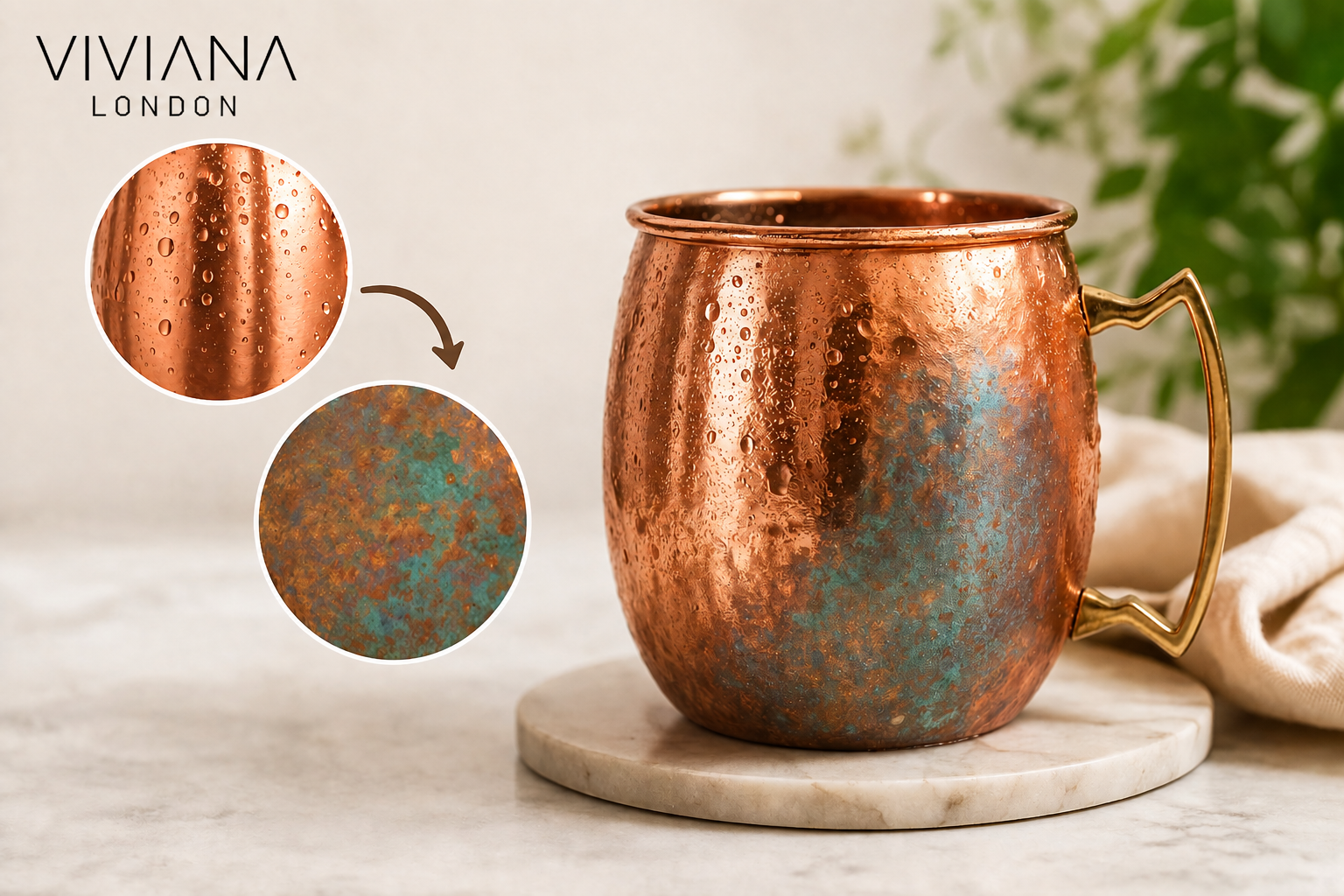
Why Do Copper Mugs Change Color?
Copper is a highly reactive transition metal that interacts readily with its environment. When exposed to oxygen, atmospheric moisture, and certain liquids, it goes through a natural transformation known as oxidation.
Depending on what elements your mug has been exposed to, discoloration generally falls into one of three categories:
1. Dark Brown or Black Tarnish
- The Cause: Routine reaction with atmospheric oxygen and ambient humidity over time.
- Is it Harmful?: Not at all. Dark tarnish is merely a surface reaction that alters the metal’s appearance without affecting its structural integrity.
2. Greenish Layer (Patina)
- The Cause: Extended exposure to standing water, high humidity, and organic acids. This coating is known as patina.
- Is it Harmful?: Yes, heavy green buildup can be toxic if ingested in large amounts. Always thoroughly clean away any green patina before using the mug.
3. Rainbow or Bluish Stains
- The Cause: Direct chemical reactions with acidic ingredients such as lemon juice, wine, or vinegar-based cocktail mixers.
- Is it harmful?: Generally no, these transient stains are simply harmless surface reactions between copper and acids. However, they indicate that the metal is reacting directly with your drink, so they are best washed away promptly.
Executive Product Summary & Feature Comparison
Mugs & Drinkware Type | Core Material | Best Suited For | Key Maintenance & Safety Benefit |
100% solid hammered copper | Chilled cocktails & premium gatherings | Delivers an ice-frosted exterior and crisp taste via superior thermal retention | |
Hammered artisan copper with stem | Red wine, white wine, & luxury gifting | Non-toxic, anti-microbial surface that enhances celebration moments | |
Solid traditional brass | Organized kitchen spice storage | Combines timeless Indian heritage design with everyday durability |
Is It Safe to Drink from a Discolored Copper Mug?
Before pouring your next drink, check the condition of your drinkware:
- Light Tarnish: Completely safe once washed and polished.
- Green Patina: Unsafe must be scrubbed clean and sanitized before use.
- Unlined Copper + Acidic Drinks: Avoid mixing citrus or alcohol in unlined raw copper to prevent unwanted metallic reactions. (Most modern luxury mugs feature a protective lining to ensure safe daily enjoyment).
Step-by-Step Guide to Cleaning Your Copper Mugs
Restoring your copper drinkware to a mirror-like shine requires simple household ingredients rather than harsh chemical abrasives:
Method 1: The Lemon and Salt Polish
Cut a fresh lemon in half, dip the exposed flesh generously into fine table salt, and gently rub it across the surface of the mug. The natural citric acid breaks down tarnish instantly while the salt acts as a gentle scourer. Rinse with warm water and dry completely.
Method 2: Vinegar and Baking Soda Paste
Mix equal parts white vinegar and baking soda into a thick paste. Apply it evenly over the discolored areas, let it sit for two minutes, scrub softly with a microfibre cloth, and rinse clean.
Method 3: Commercial Copper Cleaner
For heavily oxidized pieces, apply a trusted commercial copper polish following the manufacturer’s precise instructions.
How to Prevent Future Discoloration
- Dry Immediately: Always hand-wash your mugs with mild soap and dry them instantly with a soft towel to prevent water spots.
- Store in Dry Environments: Keep your drinkware on open shelves or cabinets with good airflow rather than damp cupboards.
- Respect the Lining: Reserve unlined copper strictly for water, and use lined vessels if you enjoy acidic cocktails or lemon water.
- Establish a Routine: Give your collection a quick maintenance clean once a week to prevent heavy tarnish from forming.
Elevate Your Home Bar with Viviana London
While managing natural oxidation requires a bit of care, the timeless beauty, chilled refreshment, and artisan elegance of pure copper make it an irreplaceable addition to any modern home.
Explore our complete collection of artisan copper mugs and barware at Viviana London today to find your next statement piece.