
If you have been eyeing a beautiful copper coffee pot and found yourself wondering whether it is actually safe to use every day, you are not alone. It is one of the most searched questions about copper homeware in the UK right now, and the answer you find online is often confusing, contradictory, or simply wrong.
So let us settle this properly.
Yes — copper coffee pots are safe. But the full answer has an important detail that every buyer needs to understand before they purchase or brew. This guide covers everything: the science, the UK regulations, the lining question, the health benefits, and exactly what to look for when buying a copper coffee pot in 2026.
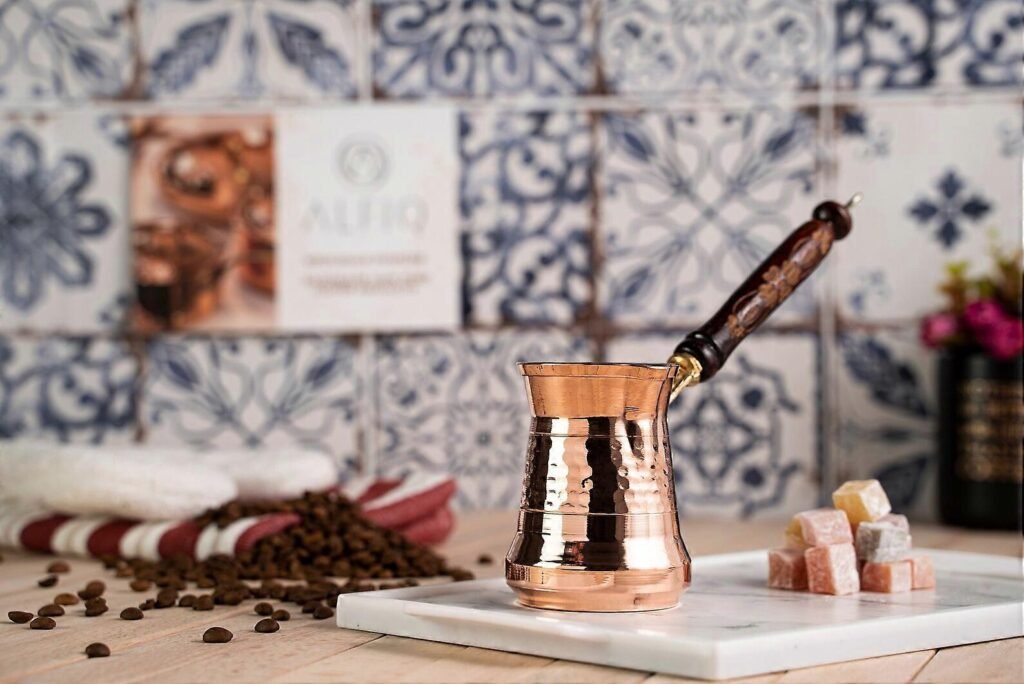
Why People Ask “Are Copper Coffee Pots Safe?” in the First Place
The concern is understandable. Copper is a reactive metal. It reacts with acidic substances — and coffee, with a pH of around 4.5 to 5.5, is acidic. When copper comes into direct, prolonged contact with acidic liquids, it can leach copper ions into the liquid. In very high doses, excess copper causes nausea, stomach cramps, and digestive discomfort.
So the concern is not irrational. It is just incomplete.
Because here is what most articles fail to mention: the copper coffee pots sold legally in the UK for food use are lined on the inside. That lining is the entire story. It is what separates a safe, daily-use copper cezve from an unlined decorative pot. Understanding this one detail answers the safety question completely.
The Science: What Actually Happens Inside a Copper Coffee Pot
When you brew coffee in a properly lined copper pot, your coffee never touches the copper at all. The interior lining — typically food-grade tin or stainless steel — creates a complete physical barrier between the acidic coffee and the reactive copper exterior.
The European Food Safety Authority (EFSA) sets the safe upper limit for daily copper intake at 10mg for adults. A properly lined copper coffee pot releases less than 0.5mg of copper per brew under standard conditions — less than 5% of the safe daily limit, even if you drink multiple cups.
UK testing under BS EN 1388-2 uses acetic acid simulation — a liquid with similar acidity to coffee — to certify copper pots for food use. Lined pots consistently pass these tests with copper migration levels well below 1.5mg per litre, the maximum permitted under retained EU Regulation 1935/2004.
In practical terms: a lined copper coffee pot, used correctly, releases a negligible amount of copper — far less than you consume daily through food, tap water, and a normal diet.
Are Copper Coffee Pots Safe? The Answer by Lining Type
The safety of your copper coffee pot depends almost entirely on what is lining the inside. Here is the complete breakdown:
Tin-Lined Copper Pots — Completely Safe ✅
Tin lining is the traditional and most widely used interior finish for copper cezves worldwide. It has been used for centuries for very good reason: food-grade tin is completely non-reactive, non-toxic, and flavour-neutral. It creates a total barrier between your coffee and the copper, making the pot completely safe for daily brewing of acidic drinks including coffee, tea, and fruit infusions.
Tin lining does wear gradually over years of use — typically lasting 5 to 10 years with daily brewing before it needs attention. When the lining becomes visibly thin or patchy, it can be professionally re-tinned by UK specialists for around £10 to £20, fully restoring the pot for another decade of use. This is not a flaw — it is simply part of owning a genuine, traditional copper cezve.
Safety rating: Completely safe for daily coffee brewing.
Stainless Steel-Lined Copper Pots — Completely Safe ✅
Stainless steel interior lining is the modern alternative to tin. It is scratch-resistant, extremely durable (lasting 20 or more years with proper care), and just as safe as tin for acidic brewing. Stainless steel is non-reactive and approved for food contact under all UK and EU regulations.
The only trade-off compared to tin is a slight reduction in heat responsiveness — stainless steel conducts heat approximately 20 to 25 per cent more slowly than tin, which means a marginally less precise temperature response. For most home brewers, this makes no practical difference. For traditional coffee purists it is worth knowing.
Safety rating: Completely safe for daily coffee brewing.
Unlined Pure Copper Pots — Not Safe for Coffee ⚠️
An unlined copper pot — bare copper on both the interior and exterior — is not safe for brewing coffee or any other acidic drink. Without a lining, the acidic coffee is in direct contact with reactive copper throughout the brewing process and the time the liquid sits in the pot. This accelerates copper leaching significantly beyond safe levels.
Unlined copper pots are beautiful and have their place — they are excellent for storing water, where the Ayurvedic practice of Tamra Jal (copper-charged water) is widely practised safely because water is not acidic. But for coffee brewing specifically, an unlined pot is not the right tool.
Safety rating: Not safe for coffee. Use for water storage only.
Nickel-Lined Copper Pots — Avoid ❌
Some cheaper copper pots use nickel as an interior lining. Nickel is one of the most common contact allergens in the UK population, affecting an estimated 10 to 15 per cent of adults — and is not recommended for regular food or beverage contact. If you encounter nickel-lined copper pots, avoid them entirely, regardless of price.
Safety rating: Not recommended. Avoid.
What Do UK Regulations Say About Copper Coffee Pots?
Post-Brexit, the UK has clear and enforceable standards for copper items used with food and drink.
All copper products sold for food contact use in the UK must comply with retained EU Regulation 1935/2004 on materials and articles intended to contact food. They must be tested to BS EN 1388-2, which specifically simulates acidic food and beverage contact to measure metal migration. Products must carry a UKCA mark or a valid Declaration of Compliance to be legally sold in the UK for food use.
The Food Standards Agency (FSA) monitors compliance and can remove non-compliant products from sale. This regulatory framework means that any copper coffee pot legally sold by a reputable UK retailer has been tested and certified as safe for its intended use.
What this means for you as a buyer: always purchase from a UK-registered seller who can provide UKCA certification or a Declaration of Compliance. Avoid unverified marketplace imports where certification cannot be confirmed.
At Viviana London, every copper product in our collection is UKCA certified, crafted from 99.9% pure copper, and fully compliant with UK food safety regulations.
The Health Benefits of Brewing in Copper
Safety aside, there is a genuinely compelling wellness argument for copper coffee pots that goes well beyond simply being safe.
Natural antimicrobial action. Copper is one of the most effective natural antimicrobial surfaces known. Research has confirmed that copper destroys 99.9% of E. coli and Salmonella bacteria within hours of contact. Brewing in a copper vessel means your pot is actively working against harmful microorganisms — something no stainless steel or glass pot can claim.
Trace mineral support. A properly lined copper pot releases trace amounts of copper into your brew — approximately 0.1 to 0.3mg per cup. This falls comfortably within the recommended daily intake of 1 to 2mg for adults and supports healthy copper levels. Copper supports immune function, collagen synthesis, iron absorption, and cardiovascular health.
Ayurvedic tradition. Copper has been used in Ayurvedic medicine for over 5,000 years as a vessel that enhances the purity and health properties of liquids brewed or stored within it. The tradition of drinking from copper vessels is described in ancient Ayurvedic texts as beneficial for digestion, anti-inflammatory properties, and overall balance—a practice increasingly embraced by the UK wellness community.
Superior brewing performance. Copper conducts heat approximately 25 times faster than stainless steel, reaching the precise 90°C to 96°C required for optimal coffee extraction without hot spots or scorching. The result is a noticeably richer, thicker, more aromatic cup of coffee — one that a stainless steel or aluminium pot cannot match.
Who Should Take Extra Care with Copper Coffee Pots?
For the vast majority of adults, a properly lined copper coffee pot used as directed poses no health concern whatsoever. However, certain individuals should take additional care:
Wilson’s Disease. This rare genetic condition impairs the body’s ability to process and excrete copper, causing copper to accumulate in organs. Anyone diagnosed with Wilson’s Disease should avoid copper cookware and consult their specialist before using any copper drinkware.
Copper allergy. A small number of people have a contact sensitivity to copper. If you notice skin reactions when wearing copper jewellery, consult your GP before using copper drinkware regularly.
Pregnant and breastfeeding women. Current NHS and EFSA guidance recommends that pregnant and nursing women stay within the recommended daily copper intake. One to two cups of coffee brewed in a properly lined copper pot is considered safe — the copper contribution is negligible. As always, consult your midwife or GP regarding caffeine intake during pregnancy.
5 Signs Your Copper Coffee Pot is Safe to Use
Not sure about the pot you already own? Here is your quick safety checklist:
1. The interior is uniformly silver or brushed silver. A bright, consistent silver interior indicates an intact tin or stainless steel lining — completely safe to use.
2. There is no green discolouration inside. Green or blue-green patches on the interior indicate verdigris — copper oxidation, which means the lining has worn through in that area. Do not use the pot for coffee until it has been re-tinned.
3. The pot has a UKCA mark or compliance documentation. Any legally sold UK food-contact copper pot will have this. If you cannot find certification, contact the seller.
4. The copper is 99.9% pure. Pure copper behaves predictably and safely. Alloys or plated metals can behave differently and may not meet the same safety standards.
5. The pot feels solid. Copper thickness of 1.5mm to 2mm is the standard for quality pots. Thin, light pots are often made with inferior materials or thinner linings.
How to Use Your Copper Coffee Pot Safely Every Day
Following these simple practices ensures your copper coffee pot remains completely safe for daily use for decades:
Never leave coffee sitting in the pot. Brew, pour, and rinse. Leaving acidic coffee sitting in any vessel — copper or otherwise — for extended periods is not good practice. With a lined copper pot the risk is minimal, but the habit of brewing and immediately serving is a good one.
Never heat an empty pot. Heating a copper pot dry can damage the tin lining and, at very high temperatures, can cause the release of metallic fumes. Always ensure there is liquid in the pot before placing it on heat.
Use low to medium heat only. A copper cezve requires a gentle simmer, not a rolling boil. Low to medium heat preserves the lining, prevents scorching, and produces the best coffee. This is good brewing practice and good safety practice simultaneously.
Hand wash only. Dishwashers damage tin lining through heat and harsh detergents. A simple hand wash with warm water and mild washing-up liquid after each use is all your pot needs.
Inspect the interior regularly. A quick visual check of the interior lining every few months takes seconds and ensures you catch any wear early, long before it becomes a safety concern.
Yes — provided the pot is properly lined (tin or stainless steel), UKCA certified, and used as directed. A quality-lined copper cezve releases less than 0.5mg of copper per brew, well within the EFSA safe daily limit of 10mg.
An unlined copper interior used with acidic drinks like coffee. Without a lining, copper leaches into the acidic liquid at unsafe rates. Always choose a pot with a confirmed tin or stainless steel interior lining.
The Bottom Line — Are Copper Coffee Pots Safe?
Yes. A properly lined, UKCA-certified copper coffee pot is completely safe for daily brewing. The science is clear, the regulations are robust, and centuries of daily use across the Middle East, Eastern Europe, and increasingly the UK confirm what the research shows.
The single most important thing to remember: always choose a lined pot from a certified UK seller. Tin or stainless steel lining, UKCA certification, 99.9% pure copper — these three criteria give you everything you need for complete peace of mind.
And beyond safety — a copper cezve brews a richer, more aromatic, more flavourful cup of coffee than almost anything else. It is a 500-year-old technology that still outperforms modern alternatives in the cup. Once you brew with copper, it is genuinely difficult to go back.
Ready to brew safely with a premium lined copper coffee pot? Explore Viviana London’s UKCA-certified copper collection — handcrafted from 99.9% pure copper, starting from £35, with free UK delivery on orders over £100. Shop now at vivianalifestyle.com.